Many people commit to fitness with genuine effort, consistency, and motivation, yet still fail to see meaningful progress. They show up regularly, push themselves during workouts, and follow the advice they are given. When results stall or regress, frustration quickly follows.
This outcome is rarely due to a lack of discipline or willpower. More often, it is the result of poorly structured training systems that were never designed to serve the individual in the first place.
Most traditional gym programs are built for convenience and scalability, not for precision or long-term development. While these programs may create short-term fatigue or motivation, they often fail to produce sustainable results. Over time, many individuals are left feeling sore, burned out, or injured rather than stronger and more capable.
Understanding why these programs fail is the first step toward building an approach that actually works.
The Limitations of Generic Gym Programming
In many commercial gyms, workouts are created to accommodate large groups of people with widely varying abilities, experience levels, and physical limitations. To make this possible, programming is often simplified, repetitive, or designed around intensity rather than strategy.
Exercises are selected because they are easy to coach in large numbers, not because they are appropriate for every individual. Volume is increased to create the perception of effort, while rest and recovery are often overlooked. Progression is inconsistent, and sessions are rarely connected to a long-term plan.
As a result, clients may feel exhausted after each workout but struggle to see measurable improvements in strength, mobility, or performance.
Another common issue is the lack of coaching oversight. In crowded gym environments, instructors are responsible for monitoring many individuals at once. This makes it difficult to provide meaningful feedback on technique, movement quality, or load selection. Small compensations and inefficiencies often go unnoticed until they develop into pain or injury.
Additionally, generic programs rarely account for biomechanics or individual movement patterns. Two people may perform the same exercise in completely different ways, placing stress on different joints and tissues. Without assessment or correction, these differences accumulate over time.
The outcome is predictable. Progress stalls, soreness becomes chronic, and motivation declines. Many people blame themselves, when in reality, the system was never designed to support them.
Why More Effort Does Not Solve the Problem
A common response to stalled progress is to train harder. People add more sessions, increase intensity, or chase the latest workout trend in hopes of breaking through plateaus.
Unfortunately, more effort does not fix poor structure.
Without a clear progression model, additional volume often leads to diminished returns. The body struggles to recover, movement quality deteriorates, and performance suffers. Instead of adapting positively, the nervous system and connective tissues become overloaded.
This cycle reinforces the misconception that fitness requires constant exhaustion. In reality, sustainable progress depends on managing stress intelligently, not maximizing it at every opportunity.
True improvement comes from applying the right stimulus at the right time, followed by adequate recovery. This requires planning, assessment, and education, not guesswork.
What Intelligent Training Actually Means
Intelligent training is structured, intentional, and individualized. It treats fitness as a process rather than a series of disconnected workouts.
At SB Performance Solutions, training begins with a detailed assessment. This evaluation examines movement quality, joint function, strength levels, training history, injury considerations, and lifestyle demands. Rather than assuming what a client needs, coaching decisions are informed by objective information.
From this foundation, programming is built to support long-term development rather than short-term exhaustion. Each phase of training has a purpose. Exercises are selected based on biomechanics and relevance to the client’s goals. Load, volume, and intensity are progressed systematically.
Recovery is treated as a critical component of success, not an afterthought. Deload periods, movement variation, and appropriate rest are integrated into the plan to ensure the body adapts positively over time.
Coaching decisions are guided by evidence, experience, and ongoing feedback. When something is not working, adjustments are made. When progress accelerates, programming evolves accordingly.
This approach removes randomness and replaces it with clarity.
The Role of Coaching in Long-Term Results
One of the most overlooked aspects of training success is quality coaching.
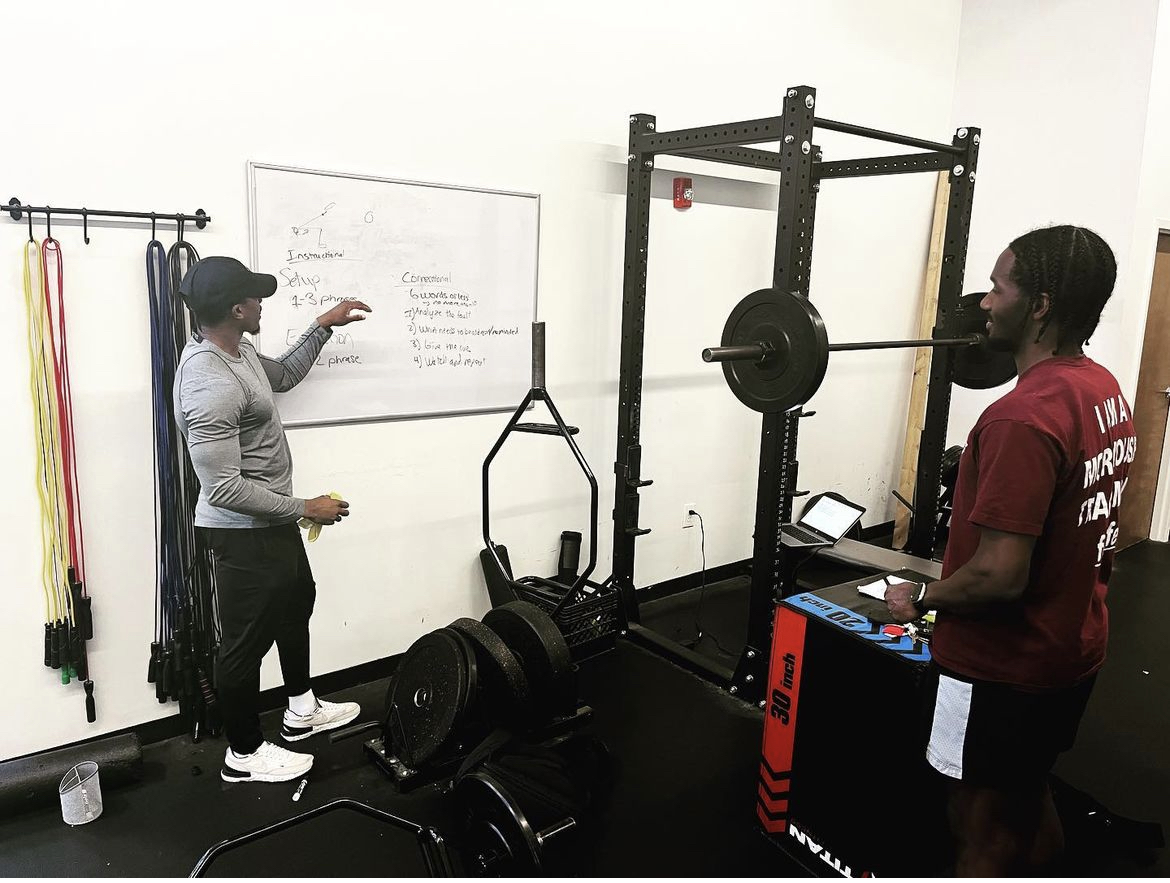
Intelligent training requires more than a written program. It requires observation, correction, and communication. Coaches must be able to recognize movement inefficiencies, adjust loading strategies, and educate clients on why certain decisions are being made.
At SB Performance Solutions, coaching is an active process. Each session includes real-time feedback to ensure exercises are performed efficiently and safely. Clients are not simply told what to do. They are taught how to move, how to brace, and how to apply effort appropriately.
This level of coaching reduces injury risk, improves performance, and builds confidence. Over time, clients develop a deeper understanding of their bodies, which allows them to train more effectively both inside and outside the gym.
Who Intelligent Training Is Designed For
Intelligent training is ideal for individuals who value efficiency, precision, and sustainability.
This includes busy professionals who want their time in the gym to be purposeful rather than exhausting. It includes former athletes who want to train with structure again, without unnecessary wear and tear. It also includes individuals who have grown frustrated with inconsistent results, recurring injuries, or programs that never seem to progress.
Rather than doing more, intelligent training focuses on doing what matters.
It prioritizes quality over quantity, structure over chaos, and education over trends. This approach supports long-term health and performance, not just short-term aesthetics.
Why Results Become Predictable
When training is built on structure and education, outcomes become far more consistent.
Progressive overload is applied thoughtfully. Movement quality improves over time. Recovery supports adaptation rather than limiting it. Clients know what they are working toward and why each phase exists.
Instead of guessing whether a program is effective, progress can be measured, evaluated, and adjusted. Strength increases, mobility improves, and confidence grows.
This predictability is not accidental. It is the result of intentional design.
Closing Perspective
Fitness should never feel random.
When training lacks structure, even the most motivated individuals struggle to see results. When training is intelligent, effort is translated into outcomes.
At SB Performance Solutions, intelligent training transforms fitness from a guessing game into a repeatable process. It replaces frustration with clarity and replaces exhaustion with progress.
Effort matters, but structure determines success.
When the system is built correctly, results follow.